Why India Is a Major Jute Sourcing Market
India is one of the major production centers for jute-based products, making it a natural sourcing market for buyers looking for plant-based alternatives to conventional bags and promotional packaging.
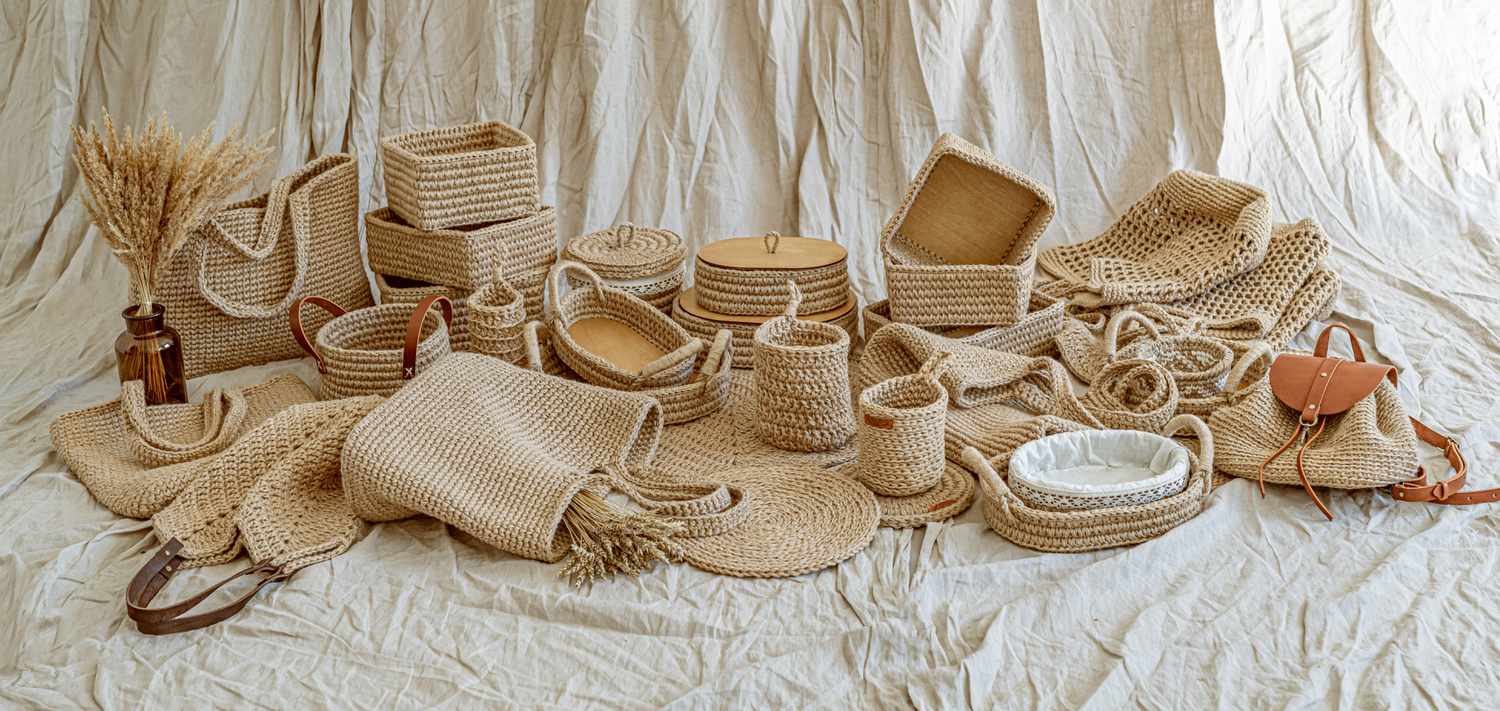
Jute is used across a wide range of products, from shopping bags and gift bags to packaging, storage products and branded promotional merchandise.
For international buyers, the sourcing opportunity is attractive, but product quality can vary considerably between manufacturers.
Choosing the Right Jute Construction
Jute products can differ in fabric weight, weave, lining, handles, stitching and finishing.
A buyer ordering a retail shopping bag will have different requirements from a company sourcing a lightweight promotional bag.
Specifications should therefore cover the fabric, dimensions, handle construction, stitching, lining and any additional components.
Customization Is Often the Key Value Addition
Jute products are particularly suitable for customization.
Depending on the manufacturer, buyers may specify dimensions, colors, handles, printing, embroidery, labels, pockets and other finishing details.
For brands and retailers, these details can transform a basic jute bag into a product that fits a particular collection or campaign.
Custom requirements should be discussed before sampling because they can affect both MOQ and production lead time.
Check Fabric and Stitching Quality
A sample should be evaluated beyond its appearance.
Buyers should look at fabric consistency, stitching strength, handle attachment, seam finishing and the overall construction of the product.
For bags intended to carry heavier products, handle strength and reinforcement are especially important.
Establishing these requirements before bulk production helps reduce quality disputes later.
MOQ and Production Planning
MOQ depends on the product and the level of customization.
Standard designs may be easier to produce in smaller quantities, while custom colors, printing or specific dimensions may require higher minimums.
Buyers should confirm sample lead time, production lead time, MOQ and packaging requirements before approving a commercial order.
Printing, Embroidery and Branding
Jute can support several forms of branding and value addition.
Screen printing, other suitable printing methods, embroidery, woven labels and custom tags can be considered depending on the product.
The choice should match the intended market and the look of the finished product.
For premium retail programs, buyers should approve a physical or production sample before authorizing bulk production.
Working With Indian Manufacturers
When comparing suppliers, buyers should consider more than the catalogue.
Important factors include manufacturing capability, customization experience, quality control, communication, production capacity and export experience.
A manufacturer that can handle both the base product and the required finishing may simplify the supply chain for the buyer.
Preparing for International Shipment
Jute products should be packed appropriately for international transportation and storage.
Before shipment, confirm carton dimensions, packing quantities, labeling requirements and the agreed shipping terms.
For larger programs, efficient packing can also have a meaningful effect on freight costs.
From First Sample to Repeat Orders
The best way to build a reliable jute sourcing program is to establish the product specification during sampling and then use the approved sample as the reference for future production.
Once dimensions, fabric, stitching, branding and packaging are agreed, repeat orders can be handled with much greater predictability.
For buyers building a sustainable product range, jute can therefore work well as a customizable category rather than simply a commodity bag.