
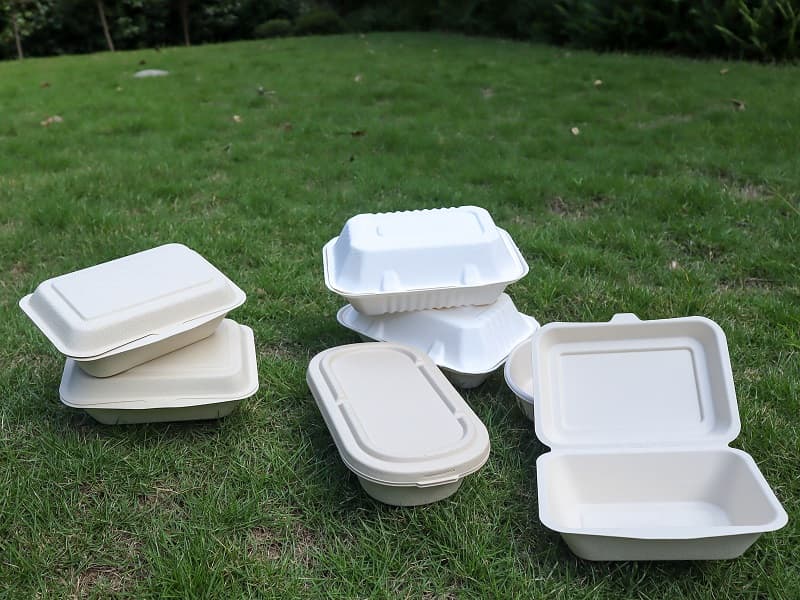
Why Bagasse Packaging from India Is Attracting Buyers
Bagasse packaging has become an important alternative to conventional plastic and foam food-service products. Made from sugarcane fiber, it is used for products such as plates, bowls, trays and clamshell containers.
For an overseas buyer, sourcing successfully is less about finding the lowest quotation and more about finding a supplier that can consistently meet the required specification.
Start With the Product Specification
Before approaching suppliers, define exactly what you need.
Dimensions, weight, material, color, finish, packaging configuration and intended use should be clear from the beginning.
For food-contact applications, the supplier should also understand the type of food, temperature and expected conditions of use.
A detailed specification reduces the chances of receiving quotations for products that are not actually comparable.
Check Compliance for the Intended Market
Food-contact requirements vary by market and application.
Buyers should ask suppliers what product-specific documentation, declarations, test reports or other compliance information is available for the intended use.
A generic certificate from a manufacturer is not necessarily sufficient for a particular product.
The documentation should correspond to the material, product and intended application being purchased.
Understand MOQ and Production Capacity
Minimum order quantities can vary significantly between manufacturers.
Before moving forward, confirm MOQ per SKU, sample availability, production lead time and whether custom dimensions or branding change the minimum order quantity.
For larger buyers, production capacity is equally important. A supplier should be able to explain how it manages repeat orders and higher-volume programs.
Evaluate Quality Before Comparing Prices
Samples should be evaluated against the specifications that will apply to commercial production.
Depending on the product, buyers may look at dimensions, weight, rigidity, surface finish, moisture resistance, stacking and packaging quality.
For repeat orders, an approved sample and written specification provide a useful reference for quality control.
Look Beyond the Factory Price
The quoted unit price is only one part of the sourcing cost.
Buyers should also consider packaging, payment terms, freight arrangements, lead times, rejection risk and consistency between shipments.
A supplier with slightly higher pricing may ultimately be more economical if it delivers reliable quality and fewer production issues.
Plan the Export Shipment
Before confirming an order, agree on the Incoterm, port of loading, shipping method, documentation and expected delivery schedule.
The buyer and supplier should also establish who is responsible for freight, insurance and destination-side charges.
Clear responsibilities at this stage can prevent avoidable delays later.
Finding the Right Long-Term Supplier
The strongest supplier relationship usually develops after successful sampling and an initial commercial order.
Once the product specification, quality expectations and logistics process are established, repeat orders become much easier to manage.
For international buyers, supplier reliability should therefore be evaluated alongside price, capacity, documentation and communication.